
Papers are welcomed in the following research fields:
Mining encompasses the extraction of valuable minerals or other geological materials from the Earth, focusing on economic viability and environmental responsibility.
Mineral Economics: Ore reserve estimation, resource valuation, commodity market analysis.
Mining Methods:
Surface Mining: Open-pit, strip mining, quarrying.
Underground Mining: Longwall, room-and-pillar, block caving.
Mineral Processing (Metallurgy):
Comminution: Crushing and grinding.
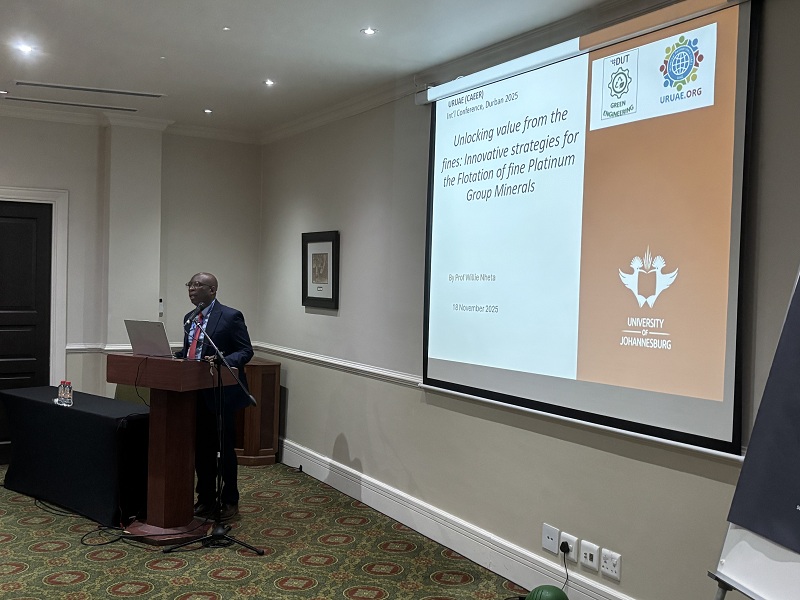
Separation: Flotation, gravity separation, magnetic/electrostatic separation.
Hydrometallurgy: Leaching processes (e.g., heap leaching for gold).
Pyrometallurgy: Smelting and refining.
Mine Closure and Reclamation: Landform design, revegetation, long-term stability planning.
Tailings Management: Design and stability of Tailings Storage Facilities (TSFs), dewatering and dry stacking.
Mine Water Management (The Intersection): Acid Mine Drainage (AMD) prevention and treatment, dewatering, water balance modeling.
Occupational Health and Safety: Ventilation, ground control, dust suppression, emergency response.
Social & Regulatory Aspects: Environmental Impact Assessment (EIA), community relations, Free, Prior, and Informed Consent (FPIC).
Water management focuses on planning, developing, distributing, and managing the optimal use of water resources, particularly in industrial and municipal contexts.
Hydrology and Hydraulics: Watershed modeling, flow measurements, flood control.
Groundwater Management: Aquifer characterization, sustainable yield, artificial recharge.
Water Quality Standards: Regulatory compliance (e.g., WHO, EPA standards), monitoring and testing.
Drinking Water Treatment: Coagulation, flocculation, sedimentation, filtration, disinfection (chlorination, UV).
Wastewater Treatment:
Primary Treatment: Solids removal.
Secondary Treatment: Biological processes (Activated sludge, bioreactors).
Tertiary/Advanced Treatment: Nutrient removal (Nitrogen/Phosphorus), membrane filtration (RO, UF, NF).
Industrial Water Treatment: Cooling tower water, boiler feed water, high-purity water systems.
Desalination: Thermal (Multi-Stage Flash, Multi-Effect Distillation) and Membrane (Reverse Osmosis) technologies.
Waste management is the collection, transport, treatment, and disposal of waste materials, often emphasizing reduction and recovery.
Waste Characterization: Composition analysis, generation rates, classification (municipal, industrial, hazardous).
The Waste Hierarchy (3Rs): Reduce, Reuse, Recycle.
Collection and Logistics: Routing optimization, transfer stations.
Disposal:
Landfilling: Design (liners, leachate collection), operation, and closure.
Waste-to-Energy (WtE): Incineration, pyrolysis, gasification.
Recycling and Recovery: Materials Recovery Facilities (MRFs), sorting technologies, market for recyclables.
Hazardous Waste Management: Classification, treatment methods (stabilization, encapsulation), regulated disposal.
E-Waste (WEEE): Collection systems, dismantling, and material recovery (e.g., urban mining).
Biomedical and Radioactive Waste: Specific handling and disposal protocols.
Construction and Demolition (C&D) Waste: Maximizing recovery of aggregates and other materials.
These topics often converge in the context of resource stewardship and circularity.
Circular Economy: Designing closed-loop systems for materials used in mining and manufacturing to minimize waste.
Water-Energy Nexus: The high energy demand of water treatment (especially desalination) and the high water demand of energy production (e.g., cooling in power plants and mining).
Environmental Remediation: Using chemical and biological methods to clean up contaminated sites (e.g., landfill leachate treatment, mine site rehabilitation).
Resource Efficiency: Optimizing material and water use in mining and industrial processes to lower overall environmental footprint.






















Copyright © 2016 URUAE. All Rights Reserved.


+351920489940, +91 9781001229


